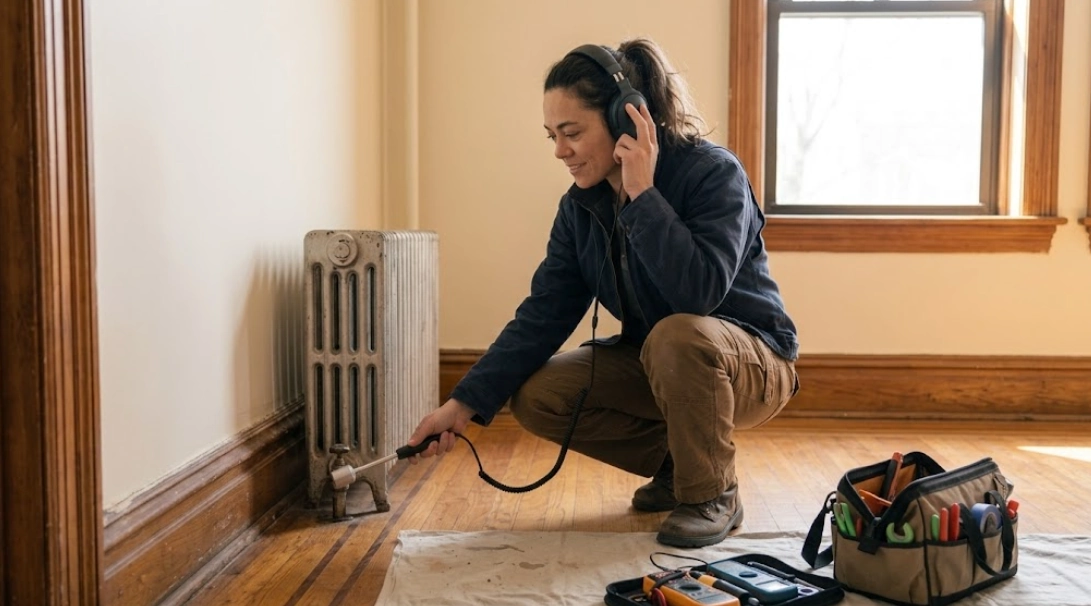
Non-Invasive Diagnostic Water Leak Detection Across Chinatown
Water leaks in Chinatown, Manhattan present unique engineering challenges rarely encountered in modern suburban construction. From multi-family walkups along Mott Street and Bayard Street to commercial mixed-use properties near Canal Street and the historic residential blocks around Columbus Park, buildings throughout this vibrant community rely on complex, multi-decade-old plumbing assemblies. When water begins escaping, identifying the exact origin is the single most critical step in protecting property value and tenant safety.
Many property owners and tenants assume that locating a water pipe failure requires tearing through floor-to-ceiling plaster, ceramic tiles, or historic masonry. Our methodology centers on modern, non-destructive leak detection in Chinatown Manhattan, combining specialized sonic sensors, thermal differential mapping, and precise pipe tracing to find concealed water intrusion without indiscriminately cutting holes across your home or business.
Whether you need focused apartment leak detection Chinatown Manhattan for a co-op board inquiry, or assistance identifying a leak in wall detection Chinatown Manhattan where moisture travels through structural joists, our diagnostics establish facts before costly restoration begins.
Common Signs of Concealed Plumbing Leaks
Water follows the path of least resistance, often traveling dozens of feet horizontally along ceiling joists, electrical conduits, or steel I-beams before penetrating living spaces. Watch for these early warning indicators:
- Damp Walls and Peeling Paint: Discolored paint blisters, powdery efflorescence on exposed brick, or spongy drywall in hallways, closets, or behind baseboards.
- Persistent Ceiling Stains: Yellow or rust-colored rings spreading across plaster ceilings, indicating intermittent or continuous water accumulation.
- Unexplained Spikes in Water Bills: Continuous municipal water meter movement when all interior faucets, fixtures, and appliances are shut off.
- Musty Odors and Humidity: Persistent earthy, damp odors in kitchens or bathrooms that do not dissipate with standard ventilation.
- Warm Flooring Patches: Warm floorboards or tiled areas indicating a hot water supply line pinhole leak beneath the subfloor.
Why Leak Investigations Are Complex in Historic Chinatown Buildings
Chinatown’s architectural fabric includes historic late-19th-century tenements, mid-20th-century loft conversions, and newer mixed-use residential towers. In older walkups, multiple apartments frequently share a single vertical wet column. Supply branches feed adjacent kitchens and bathrooms back-to-back through narrow pipe chases.
Over time, vibrations from the nearby subway corridors, temperature swings from uninsulated steam heating pipes, and natural foundation settlement place stress on rigid pipe joints. When an occupant reports a water leak from upstairs apartment Chinatown Manhattan, the actual failure point may not be directly above the stain; it could originate two floors higher or from a shared riser running behind a neighbor’s pantry. Without specialized hidden water leak detection Chinatown Manhattan, guessing leads to damaged walls and disputed repair bills.
Suspect a Concealed Water Leak?
Speak directly with an experienced local plumbing professional to discuss diagnostic testing and avoid unnecessary wall demolition.
Call (315) 202-8009
How Leak Detection Works: Diagnostic Step-by-Step
Locating concealed pipe leaks requires a methodical diagnostic protocol. We isolate possibilities systematically:
1
Initial Visual and Pressure Assessment
We inspect accessible fixture connections, shutoff valves, and water meters. Static and dynamic pressure tests confirm whether the municipal supply line holds steady pressure or exhibits continuous pressure drop.
2
Thermal Infrared Imaging
High-resolution infrared thermal cameras inspect walls, ceilings, and flooring surfaces. Evaporating water creates subtle surface temperature variations that reveal the exact path of moisture migration through building materials.
3
Acoustic Frequency Listening
Pressurized water escaping through microscopic pipe fractures emits distinct acoustic frequencies. Specialized ground microphones and pipe contact probes filter ambient street noise from the Manhattan Bridge and Canal Street traffic to isolate the precise leak source.
4
Pinpoint Location & Remediation Plan
Once the breach is located within a 1-to-2-foot radius, we provide an objective repair plan outlining whether localized pipe repair or broader repiping is warranted.
Distinguishing Supply Leaks from Drainage and Condensation
Not every leak originates from a pressurized fresh water pipe. Our diagnostic testing distinguishes between four primary sources of moisture:
- Pressurized Supply Leaks: Continuous water flow that does not cease when fixtures are unused. Typically creates rapid ceiling saturation and steady meter movement.
- Gravity Drainage Leaks: Intermittent leaks that occur only when a sink, shower, or dishwasher drains. Often connected to decaying cast-iron hub joints or loose tub waste-and-overflow assemblies.
- Radiator and Steam Heating Leaks: Seasonal moisture appearing primarily during winter heating cycles, linked to leaking radiator air valves, packing nuts, or steam risers.
- Condensation and Humidity Infiltration: Uninsulated cold water pipes sweating in unventilated wall cavities during humid summer months, creating mildew without active pipe breaches.
Ceiling Leaks and Multi-Family Coordination
Managing ceiling leak repair Chinatown Manhattan requires diplomacy and clear technical communication between tenants, landlords, and building managers. If water is dripping into your unit, documenting the drip frequency, photographing the spread, and requesting access to the apartment above facilitates timely inspection.
Under NYC Housing Maintenance Code regulations, property owners are responsible for maintaining common plumbing infrastructure in safe working order. Pinpointing whether the leak is on a common riser or an individual tenant fixture eliminates delays in assigning repair responsibility.
Repair vs. Replacement: What Affects Project Scope
Once a leak is accurately pinpointed, property owners must decide between localized spot repairs and comprehensive section replacements. If an isolated pinhole failure occurs on a newer copper line, a targeted solder or press repair is highly effective. However, if the inspection reveals widespread interior pitting, extensive rust, or brittle galvanized lines that have reached the end of their service life, repeated localized patching often leads to subsequent leaks nearby.
Factors affecting repair scope include pipe accessibility, whether the line is enclosed behind historic lath-and-plaster or modern drywall, building co-op alteration guidelines, and whether municipal permits or NYC Licensed Master Plumber filings are required.
Serving Chinatown, Two Bridges, and Lower Manhattan
Our service territory covers the core Chinatown corridor as well as leak detection near Two Bridges, leak detection near Lower East Side, and leak detection near SoHo & Tribeca. Whether you manage a restaurant near the Manhattan Bridge approach or own a cooperative apartment on East Broadway, local familiarity with Lower Manhattan plumbing infrastructure ensures responsive, practical solutions.
Frequently Asked Questions About Leak Detection in Chinatown
Q
How do plumbers locate hidden water leaks behind Chinatown apartment walls without tearing them down?
Technicians use non-invasive diagnostic tools, including sensitive acoustic listening discs, electronic pipe locators, calibrated moisture meters, and thermal imaging cameras. These instruments identify thermal differentials and sound frequencies created by escaping pressurized water, pinpointing the leak origin to a small radius without invasive wall demolition.
Q
What should I do if water is leaking from the upstairs apartment in Chinatown?
Immediately alert the upstairs tenant and the building superintendent to check if water is overflowing or if an appliance supply line has failed. Avoid touching electrical fixtures or light switches directly beneath water stains. Place containers to catch dripping water, shut off the local isolation valve if accessible, and call NY Plumbing at (315) 202-8009 to diagnose the vertical riser or branch line.
Q
Why are ceiling leaks so frequent in historic Chinatown walkups and tenements?
Historic Chinatown multi-family buildings around Mott Street, Bayard Street, and East Broadway often utilize shared vertical wet walls containing vintage galvanized steel water pipes and lead or cast-iron waste branches. Over decades, microscopic corrosion, settling building foundations, and failing subfloor bathroom waterproofing allow water to track along structural joists before showing on lower ceilings.
Q
Does a small brown stain on the drywall or plaster ceiling always mean an active pipe leak?
Not always. Stains can stem from past leaks that have dried, occasional bath overflows, HVAC condensation, or steam radiator valve leaks during cold weather. Moisture meter readings confirm whether moisture is actively present or if the stain represents legacy damage.
Q
Who is responsible for repairing water leaks in a Chinatown cooperative or condominium?
In NYC co-ops and condos, building bylaws generally dictate that shared vertical risers, main water stacks, and structural infrastructure are the building corporation's responsibility, while fixture branches beyond the individual apartment shutoff valve are the unit owner's responsibility. Non-invasive leak tracing establishes the exact pipe section to resolve jurisdictional questions.
Explore Related Plumbing & Infrastructure Services
Leak detection is often the first step in resolving comprehensive building plumbing needs. Discover our specialized services tailored to Chinatown and Lower Manhattan properties:
🚰
Pipe Leak Repair
Targeted repair for pinhole copper leaks, burst galvanized risers, and corroded brass fittings behind walls and under floors.
View Pipe Leak Services →
🔧
Repiping
Complete or partial replacement of obsolete galvanized supply lines with durable Type L copper or code-approved PEX systems.
View Repiping Solutions →
🔥
Water Heater Repair
Rapid troubleshooting for residential gas, electric, and tankless water heaters experiencing temperature loss or tank leaks.
View Water Heater Services →
♨️
Boiler Repair
Steam and hydronic heating boiler troubleshooting, pressure relief diagnostics, and burner service for Chinatown multi-families.
View Boiler Repair Services →
⚠️
Gas Line Repair & Inspection
Combustible gas leak testing, pressure decay evaluations, and NYC Local Law 152 periodic inspection compliance.
View Gas Line Services →
🚿
Drain Cleaning
Heavy-duty motorized snaking and hydro-jetting to clear stubborn grease clogs and main sewer blockages in commercial kitchens and homes.
View Drain Cleaning Services →
🛡️
Backflow Testing
Annual testing, certification, and NYC DEP filing for RPZ and double check backflow prevention containment assemblies.
View Backflow Testing →
Schedule Leak Detection in Chinatown Today
Protect your building from structural water damage and mold. Call our Chinatown specialists to discuss non-invasive leak location.
Call (315) 202-8009